


How to Teach Kids Self Love with Fun Healthy Lunch Ideas
A lunchbox can carry more than sandwiches and fruit. It can also carry a quiet message: your body deserves care, your tastes matter, and you are worth the effort.
Children do not learn self-love from one big speech. They learn it through repeated, ordinary moments. The way adults talk about food, bodies, hunger, fullness, mistakes, preferences and choice can shape how children see themselves. Packing lunch together is one of those small daily moments that can become surprisingly powerful.
Healthy eating should never be used to make children feel ashamed, controlled or “good” only when they eat certain foods. A kinder approach is to help children notice how different foods help them play, learn, grow and feel steady. When food becomes a way to practise care rather than judgement, children can build body trust and confidence one lunch at a time.
This article shares practical ways to encourage self-love through lunch, plus fun, nutritious recipes kids can help prepare.
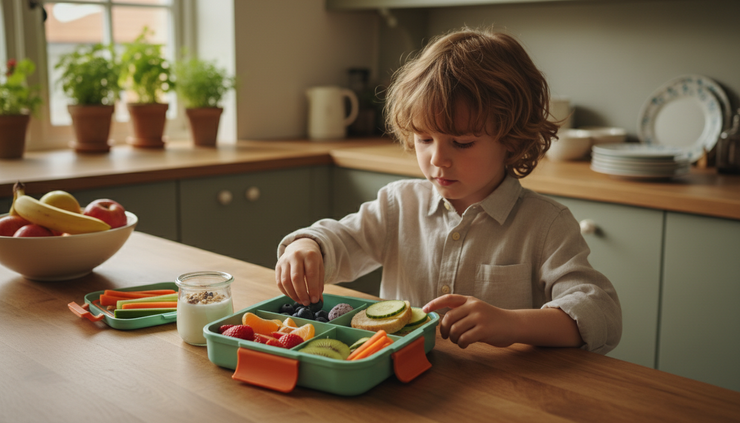
Food can teach children care without shame
Children watch more than they listen. If lunch is surrounded by stress, criticism or pressure, they may start to connect eating with worry. If lunch is surrounded by warmth, choice and curiosity, it can support a healthier relationship with food and self.
The Australian Dietary Guidelines, published by the National Health and Medical Research Council, encourage a variety of foods from the five food groups: vegetables and legumes, fruit, grain foods, lean proteins, and dairy or alternatives. That guidance is helpful, but the emotional tone matters too.
A child does not need a perfect lunchbox. They need regular chances to learn that:
Their body gives them helpful signals, such as hunger and fullness.
All bodies need food, rest, movement and kindness.
Trying new foods can be brave, but not forced.
Food is not a reward for being “good” or a punishment for making mistakes.
Enjoyment belongs at the table too.
A parent might say, “Let’s pack something crunchy, something filling and something colourful,” rather than, “We need to be good today.” That small language shift removes moral judgement and keeps the focus on care.
It also helps to avoid talking about bodies in terms of size or appearance during meals. Instead, talk about function and feeling.
Try phrases like:
“This lunch gives your body energy for the playground.”
“Your tummy knows when it has had enough.”
“You can learn what foods help you feel ready for the afternoon.”
“Your body is your home, and we can be kind to it.”
This is one simple way to help a child learn to love yourself as a daily practice, not as a performance.
Let kids help make lunches they feel proud of
Children are more likely to eat food they helped choose or prepare. They also get a confidence boost from doing real tasks. Lunch packing is a safe place to offer choices without handing over the whole kitchen.
For younger children, keep choices small.
“Would you like apple slices or grapes?”
“Would you like your wrap rolled up or cut into pinwheels?”
For older children, invite more planning.
“What is one lunch you would like to help make this week?”
“What can we add so it keeps you full until the afternoon?”
This builds decision-making skills. It also teaches children that their preferences matter. That is a gentle but powerful self-love lesson.
Keep the lunchbox formula simple
A flexible formula can make lunch less stressful:
Lunchbox part | Kid-friendly examples |
Something filling | Wholegrain wrap, pasta, rice, couscous, wholemeal sandwich |
Protein food | Egg, tuna, chicken, chickpeas, tofu, yoghurt, cheese, beans |
Colourful plant food | Carrot, cucumber, capsicum, cherry tomatoes, berries, orange wedges |
Crunch or fun | Air-popped popcorn, seed crackers, roasted chickpeas, corn thins |
Comfort item | A favourite fruit, small homemade muffin, cheese cube, dip, note from home |
This is not a rule. It is a guide. Some days the lunchbox will come home half-full. Some days a child will eat the same thing over and over. That is normal.
The goal is to create rhythm, not pressure.

Fun and nutritious lunch ideas kids can help prepare
These recipes are designed to be simple, flexible and school-lunch friendly. Adjust ingredients for allergies, school policies and your child’s needs. For health concerns or special diets, seek advice from a qualified health professional. This article is general information only.
Rainbow wrap pinwheels
These are bright, soft and easy for small hands to help roll.
Ingredients
1 wholegrain wrap
2 tablespoons hummus, cream cheese or mashed avocado
Grated carrot
Cucumber strips
Capsicum strips
Grated cheese or shredded chicken
Baby spinach, finely chopped if preferred
Kid jobs
Spread the base with a child-safe knife.
Sprinkle vegetables across the wrap.
Help roll it tightly.
Count the pinwheels after an adult slices them.
Self-love activity
Ask your child to choose a colour and name one strength that colour reminds them of.
Yellow might mean cheerful. Green might mean calm. Red might mean brave.
Then place the pinwheels in the lunchbox and say, “This is a brave, colourful lunch for a brave, colourful person.”
Build-your-own mini lunchbox pizzas
These work well cold and can be made the night before.
Ingredients
Wholemeal English muffin halves or pita rounds
Tomato paste or passata
Grated cheese
Corn kernels
Sliced mushrooms
Capsicum
Pineapple pieces
Shredded chicken, beans or lean ham
Kid jobs
Spread tomato paste.
Add toppings.
Create a smiley face, pattern or initials.
Help pack once cooled.
Bake until the cheese melts, then cool before packing.
Self-love activity
While decorating, invite your child to say one thing they like about how their body helps them.
Examples:
“My legs help me run.”
“My hands help me draw.”
“My eyes help me read.”
Keep it natural and light. The aim is gratitude, not forced positivity.
Crunchy rainbow rice paper rolls
Rice paper rolls can be fun because they feel like a craft project. They may take practice, which is part of the learning.
Ingredients
Rice paper sheets
Cooked vermicelli noodles or rice
Lettuce
Carrot sticks
Cucumber sticks
Tofu, chicken, egg strips or prawns if suitable
Mint leaves, optional
Mild dipping sauce in a leakproof container
Kid jobs
Choose fillings.
Layer ingredients.
Fold the sides with help.
Name each roll.
If the rolls tear, smile and call them “crunchy rainbow parcels”. Mistakes in the kitchen are a lovely chance to model self-compassion.
You might say, “It did not roll the way we planned. We can still eat it. Trying counts.”
Apple sandwich stacks
These are quick, sweet, crunchy and satisfying.
Ingredients
Apple slices cut into rounds
Peanut-free spread if needed, such as sunflower seed butter, tahini, cream cheese or yoghurt-based spread
Sultanas
Seeds if allowed
Cinnamon
Granola clusters, if suitable
Kid jobs
Pat apple slices dry.
Spread the filling.
Sprinkle toppings.
Stack two slices together.
Positive affirmation
Before closing the lunchbox, invite your child to choose one affirmation:
“I can try again.”
“I am learning every day.”
“My body deserves kindness.”
“I can listen to my body.”
“I am proud of who I am.”
Writing the affirmation on a small note can make lunchtime feel reassuring, especially for children who find school days tiring.

Use lunchbox routines to build self-esteem
Healthy eating habits are not only about nutrients. They also involve skills, confidence and emotional safety. A child who can help make lunch, name what they enjoy and listen to their body is practising self esteem in a real-world way.
Here are gentle routines that can help.
Make a weekly “I choose” lunch list
Sit together once a week and write a short list of lunchbox options. Keep it simple.
Use categories such as:
Wraps or sandwiches
Fruit
Crunchy vegetables
Dips
Warm-weather snacks
Something extra
Let your child choose one item from each category for two or three days. This gives choice within a caring structure.
If your child chooses the same fruit all week, that is okay. Familiar foods can help children feel safe.
Create a “try it tiny” habit
New foods can feel overwhelming. A tiny taste lowers the pressure.
A “try it tiny” portion might be:
One chickpea
One cucumber coin
One small cube of cheese
One spoonful of pasta salad
One lick of a new dip
Make it clear that trying does not require liking. Children are allowed to have preferences. This protects trust.
You might say, “Your tastebuds are still learning. You do not have to love it today.”
Talk about food by what it does
Food language can shape how children think about themselves. Instead of “clean food” or “junk food”, try simple, neutral descriptions.
“This helps keep you full.”
“This gives quick energy.”
“This adds crunch.”
“This has calcium for bones and teeth.”
“This is a sometimes food, and we can enjoy it without guilt.”
The Australian Government’s Eat for Health resources use the idea of enjoying a wide variety of nutritious foods and limiting discretionary foods. At home, that can become a calm conversation about balance rather than a strict judgement.
Celebrate effort, not eating performance
Praise the helpful act, not the amount eaten.
Try:
“You helped make your lunch with care.”
“You tried a new texture today.”
“You packed your water bottle by yourself.”
“You noticed you were still hungry after school and told me.”
Avoid:
“You were good because you ate all your vegetables.”
“You have to finish that or you cannot have dessert.”
“That food will make you fat.”
“I was naughty for eating cake.”
Children deserve to know that food choices do not change their worth.
Positive affirmations and lunchbox activities children may enjoy
Affirmations work best when they feel believable and connected to real life. A child who feels nervous may not connect with “I am amazing at everything.” A gentler line like “I can ask for help” may feel more true.
Try rotating affirmations through the week.
Situation | Helpful affirmation |
Trying a new food | “I can be curious.” |
A hard school day | “I can take one step at a time.” |
Friendship worries | “I am worthy of kindness.” |
Big feelings | “My feelings are allowed.” |
Making mistakes | “I can try again.” |
Body confidence | “My body helps me live, play and learn.” |
Add a lunchbox kindness card
Place a small note in the lunchbox once or twice a week. Keep it specific.
Examples:
“You worked hard on your reading yesterday.”
“I loved how you helped set the table.”
“Your ideas matter.”
“Remember to drink water and take a slow breath.”
Specific notes feel more meaningful than broad praise. They show children that they are seen.
Try a five-senses lunch check
This activity can help children slow down and notice food without pressure.
Ask them to choose one food and notice:
What colour is it?
Is it crunchy, soft, juicy or chewy?
What does it smell like?
What sound does it make?
How does it feel in the mouth?
This builds mindful attention. It can also help selective eaters explore food in a low-pressure way.
Pack a “proud moment” prompt
Once a week, add a small blank card that says, “One thing I did today that I feel proud of is…”
After school, your child can tell you their answer or draw it. Keep the moment relaxed. If they cannot think of anything, offer a gentle prompt.
“Did you keep trying at something?”
“Did you help someone?”
“Did you ask a question?”
Pride grows when children learn to notice their own effort.

Helpful references for Australian families
The following resources offer general guidance on children’s nutrition, wellbeing and development:
National Health and Medical Research Council, Australian Dietary Guidelines, Eat for Health.
Australian Government, Eat for Health resources on the five food groups and healthy eating patterns.
Raising Children Network, Australian parenting resources on child development, eating habits and positive routines.
World Health Organization guidance on child health, nutrition and supportive environments.
These resources can guide family food choices, but every child is different. Allergies, sensory needs, disability, culture, appetite, growth, budget and school rules all matter. A caring lunchbox is one that fits the child in front of you.

A gentle takeaway for parents
Teaching children self-love does not require perfect meals, perfect words or perfect routines. It grows through repetition. A child helps spread hummus. A parent speaks kindly about their own body. A lunchbox includes colour, comfort and choice. A mistake in the kitchen becomes a laugh instead of a lecture.
Healthy lunches can support children’s bodies, but the way lunch is prepared and discussed can support their hearts too.
Start small this week. Invite your child to choose one fruit, prepare one wrap or write one affirmation. Let lunch become a quiet daily reminder: you are cared for, you are capable, and your body is worthy of kindness.


Comments